Select The ISSUE
Browse Through The Latest ISSUES
Featured Child Mortality Content
Child Mortality
5.9 million children under the age of 5 years died in 2015.
More than half of these early child deaths are due to conditions that could be prevented or treated with access to simple, affordable interventions.
Leading causes of death in children under 5 years are preterm birth complications, pneumonia, birth asphyxia, diarrhoea and malaria. About 45% of all child deaths are linked to malnutrition.
Children in sub-Saharan Africa are more than 14 times more likely to die before the age of 5 than children in developed regions.
A child’s risk of dying is highest in the neonatal period, the first 28 days of life. Safe childbirth and effective neonatal care are essential to prevent these deaths. 45% of child deaths under the age of 5 years take place during the neonatal period.
Preterm birth, intrapartum-related complications (birth asphyxia or lack of breathing at birth), and infections cause most neonatal deaths.
Clean Water
Clean water definition: “absent of pathogenic (illness causing) microorganisms or harmful levels of poisonous chemicals or radiation.”
Clean drinking water, proper toilets and good hygiene are essential, yet millions of people don’t have access to these basic services.
Across the world, women are forced to waste precious time walking long distances to collect dirty water. Girls are dropping out of school because there are no private toilets, and young children are not surviving to see their fifth birthday because of preventable diseases.
Featured Clean Water Content
Featured Climate Change Content
Climate Change
Climate change is a large-scale, long-term shift in the planet’s weather patterns or average temperatures. Earth has had tropical climates and ice ages many times in its 4.5 billion years. So what’s happening now?
Since the last ice age, which ended about 11,000 years ago, Earth’s climate has been relatively stable at about 14 °C. However, in recent years, the average temperature has been increasing.
The information below details the seven main sources of evidence for climate change. You can find out more about the difference between weather and climate, what drives our climate and how our climate is changing in our What is climate change? or scroll to the foot of this page for our video – What is climate change?
Higher temperatures
Scientific research shows that the climate – that is, the average temperature of the planet’s surface – has risen by 0.89 °C from 1901 to 2012. Compared with climate change patterns throughout Earth’s history, the rate of temperature rise since the Industrial Revolution is extremely high.
Community Development
Community development is a process where community members come together to take collective action and generate solutions to common problems. Community wellbeing (economic, social, environmental and cultural) often evolves from this type of collective action being taken at a grassroots level. Community development ranges from small initiatives within a small group to large initiatives that involve the broader community.
Community development seeks to improve quality of life. Effective community development results in mutual benefit and shared responsibility among community members. Such development recognises:
Community development helps to build community capacity in order to address issues and take advantage of opportunities, find common ground and balance competing interests. It doesn’t just happen – capacity building requires both a conscious and a conscientious effort to do something (or many things) to improve the community.
Featured Community Development Content
Featured Disease Content
Disease
The World Health Organization’s priority infectious diseases in developing countries are malaria, tuberculosis and HIV. Including Also, respiratory tract infections, and diarrheal diseases which together represent >90% of deaths . The remaining 10% are due to tropical diseases and various other infections .
In developing countries, people affected by certain diseases face stigma and discrimination, disability and a vicious cycle of ill health and poverty. Diseases that can be prevented, managed, or cured cause significant suffering and mortality due to a lack of basic knowledge and inadequate health services.
Education
More than 115 million 6- to 12-year-olds are not in school in the developing world; three-fifths of them are girls. More than 150 million children in the developing world start school but do not complete four years; in Sub-Saharan Africa, only one in three who attend school complete a primary education.
People agree that all children have the right to an education. But investing in education is also the smart thing to do. Why? Because education gives people the skills they need to help themselves out of poverty and into prosperity.
Improved Health: With education, people are better prepared to prevent disease and to use health services effectively. For example, young people who have completed primary education are less than half as likely to contract HIV as those with little or no schooling. Educated mothers have healthier children. Higher wages and economic growth: In many poor countries, with each additional year of schooling, people earn 10% higher wages. These earnings, in turn, contribute to national economic growth. No country has ever achieved continuous and rapid growth without reaching an adult literacy rate of at least 40%.
Featured Education Content
Featured Health Content
Health
Health promotion is the process of enabling people to increase control over, and to improve, their health.
It moves beyond a focus on individual behaviour towards a wide range of social and environmental interventions.
Homelessness
The last time a global survey was attempted – by the United Nations in 2005 – an estimated 100 million people were homeless worldwide.
As many as 1.6 billion people lacked adequate housing (Habitat, 2015).
Intro text about Homlessness.
Getting an accurate picture of global homelessness is extremely challenging. Definitions of homelessness vary from country to country. Census data is typically collected based on household and, while most census data takes into account those living in shelters and receiving government aid, census takers struggle to count the “hidden homeless” – those who may be residing in inadequate settlements such as slums, squatting in structures not intended for housing, couch surfing with friends and family, and those who relocate frequently.
Featured Homelessness Content
Featured Malaria Content
Malaria
Malaria is a life-threatening disease caused by parasites that are transmitted to people through the bites of infected female Anopheles mosquitoes.
In 2015, 91 countries and areas had ongoing malaria transmission.
Malaria is preventable and curable, and increased efforts are dramatically reducing the malaria burden in many places.
Between 2010 and 2015, malaria incidence among populations at risk (the rate of new cases) fell by 21% globally. In that same period, malaria mortality rates among populations at risk fell by 29% globally among all age groups, and by 35% among children under 5.
Sub-Saharan Africa carries a disproportionately high share of the global malaria burden. In 2015, the region was home to 90% of malaria cases and 92% of malaria deaths.
Indoor Smoke
Around 3 billion people cook and heat their homes using open fires and simple stoves burning biomass (wood, animal dung and crop waste) and coal.
Over 4 million people die prematurely from illness attributable to the household air pollution from cooking with solid fuels.
More than 50% of premature deaths due to pneumonia among children under 5 are caused by the particulate matter (soot) inhaled from household air pollution.
3.8 million premature deaths annually from noncommunicable diseases including stroke, ischaemic heart disease, chronic obstructive pulmonary disease (COPD) and lung cancer are attributed to exposure to household air pollution.
Featured Indoor Smoke Content
Featured Volunteering Content
Volunteering
In recent decades there has been a boom in international volunteer tourism, mainly in the form of the growth of gap-year companies offering placements, linked to conservation and community well-being goals. This paper makes two points: firstly, it argues that the growth of volunteer tourism is in part a product of the politics of the current period—the decline of grand narratives and the growth of ‘life political’ alternative forms of agency. Hence volunteer tourism, motivated by the impulse to ‘make a difference’, tells us something about the way in which development issues are being conceived of by idealistic young people who comprise the majority of volunteer tourists. Secondly, the paper takes issue with the view that today’s volunteer tourists are part of a tradition of colonialism and neo-colonialism that projects western conceptions of modernization onto the Third World societies to the detriment of the latter. Rather, it is argued that the politics behind volunteer turism is better characterized as a rejection of modernization as development in favour of a post-development influenced approach.
Slavery
Modern Slavery
There are tens of millions of people trapped in various forms of slavery throughout the world today. Researchers estimate that 21 million are enslaved worldwide, generating $150 billion each year in illicit profits for traffickers.
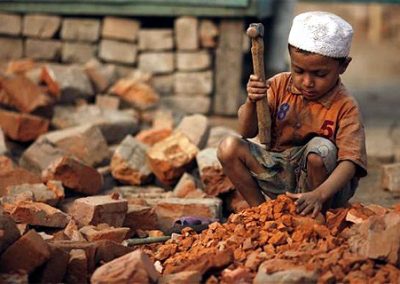
Labor Slavery. About 78 percent toil in forced labor slavery in industries where manual labor is needed—such as farming, ranching, logging, mining, fishing, and brick making—and in service industries working as dish washers, janitors, gardeners, and maids.
Sex Slavery. About 22 percent are trapped in forced prostitution sex slavery.
Child Slavery. About 26 percent of today’s slaves are children.
Slavery today is a hidden crime, making it harder for the public to see and for those in slavery to call out for help.
Slavery statistics come from the U.N. International Labor Organization. See our Trafficking and Slavery Fact Sheet for details.